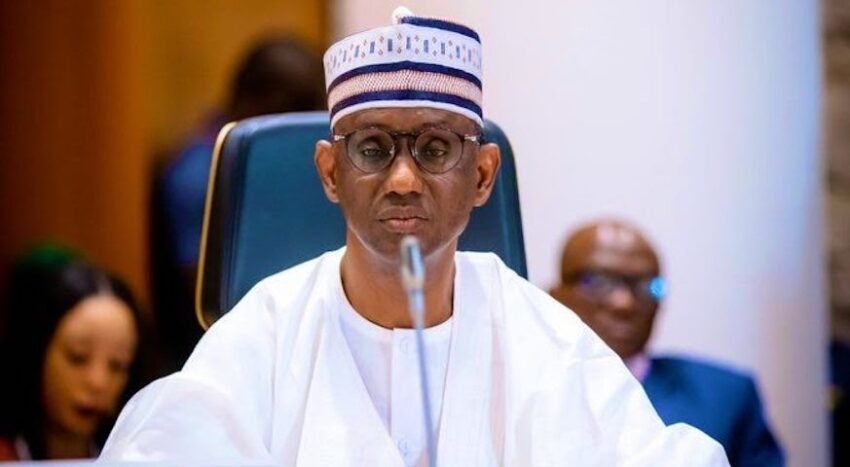
Mallam Nuhu Ribadu is one of the most consequential figures in Nigeria’s modern governance history, a lawyer, retired police officer, and politician who served as the first Executive Chairman of the Economic and Financial Crimes Commission from 2003 to 2007, launching the most aggressive anti-corruption campaign Nigeria had ever witnessed, and who now serves as National Security Adviser to President Bola Ahmed Tinubu since June 2023.
His career spans the courtroom, the law enforcement agency, the international fellowship circuit, and the political arena, making him one of the most multi-dimensional figures in contemporary Nigerian public life.
Born on November 21, 1960, in Yola, Adamawa State, Ribadu built his reputation through fearless prosecution of corruption at the highest levels of Nigerian government, banking, and business during his EFCC tenure. He secured over 270 convictions, charged former state governors and bank executives, and famously collected a $15 million bribe from a governor as evidence before prosecuting him.
His removal from the EFCC in 2007–2008 and brief exile from Nigeria before his return to political life in 2011 is a story of the personal costs that genuine anti-corruption work can impose on those who pursue it honestly in Nigeria’s complex political environment.
Profile
| Full Name | Nuhu Ribadu MNI |
| Born | November 21, 1960 |
| Age | 65 years old |
| Birthplace | Yola, Adamawa State, Nigeria |
| State of Origin | Adamawa State, Nigeria |
| Nationality | Nigerian |
| Occupation | National Security Adviser, Retired Police Officer, Lawyer, Politician |
| Religion | Islam |
| Spouse | Zara Ribadu |
| Children | Sadiq, Mahmoud, Fatima, Ahmad, Tahir |
Early Life
Nuhu Ribadu was born on November 21, 1960, in Yola, the capital of Adamawa State in northeastern Nigeria.
He grew up in an environment shaped by the cultural diversity of northeastern Nigeria and displayed early academic promise and a strong interest in public service.
The discipline and intellectual rigour that would later define his professional conduct were evident from his formative years.
Education
Ribadu pursued his legal education at Ahmadu Bello University in Zaria, where he earned both a Bachelor of Laws degree and subsequently a Master of Laws degree focusing on the jurisprudence of corruption in Nigeria. He was called to the Nigerian Bar in 1984 after graduating from Nigerian Law School. He attended Harvard Business School for executive training in the strategic management of law enforcement agencies and was a Senior Fellow at St Antony’s College, University of Oxford. He holds an honorary Doctor of Laws degree from Babcock University. He is also a Member of the National Institute (MNI), designating completion of senior-level policy studies.
Career
After qualifying as a lawyer, Nuhu Ribadu joined the Nigerian Police Force, where he served for 18 years across various roles in criminal investigation and prosecution, rising to become Assistant Inspector General of Police. His legal skills and investigative diligence made him a natural candidate for the new anti-corruption agency being established in 2003. In April 2003, President Olusegun Obasanjo appointed Ribadu as the pioneer Executive Chairman of the Economic and Financial Crimes Commission, a mandate to combat financial crime, fraud, and corruption at the highest levels of Nigerian society.
His four-year tenure at the EFCC was transformative. The commission issued thousands of indictments and achieved approximately 270 convictions. High-profile targets included the Inspector General of the Nigerian Police Force Tafa Balogun, who was convicted of embezzling billions of naira and required to return £150 million in a plea bargain. Former state governors, ministers, senators, bankers, and advance fee fraud operators were prosecuted in ways that had previously been considered politically impossible in Nigeria. His statement to the BBC in October 2006 that over $380 billion had been stolen or wasted by Nigerian governments since independence attracted international attention. His work earned Nigeria’s delisting from the FATF List of Non-Cooperative Countries, admission into the Egmont Group, and the withdrawal of the US Treasury FINCEN advisory on Nigeria.
In December 2007, in circumstances widely attributed to political pressure from the incoming government of President Umaru Yar’Adua, Ribadu was removed from the EFCC chairmanship and sent on a mandatory year-long training course. He was subsequently demoted and dismissed from the Nigerian Police Force in December 2008. He left Nigeria and assumed a fellowship at the Center for Global Development in Washington before returning to Nigeria in 2010 and declaring his presidential candidacy for the 2011 general elections, which he contested under the Action Congress of Nigeria. He lost to incumbent President Goodluck Jonathan but the race established him as a significant national political figure. In 2012, he chaired the Petroleum Revenue Special Task Force. In June 2023, President Bola Tinubu appointed him as National Security Adviser, returning him to the most senior levels of Nigerian government.
Awards & Honours
World Bank Jit Gill Memorial Award for Outstanding Public Service (2008). Honorary Doctor of Laws, Babcock University. TED Senior Fellow. ThisDay newspaper Game Changer Award (2015). Multiple international recognitions for anti-corruption leadership. Named repeatedly as Man of the Year in Nigerian media during his EFCC tenure.
Social Media
Nuhu Ribadu maintains a measured presence on social media platforms appropriate to his senior government position.
Official communications from his office are issued through formal government channels.
Personal Life
Nuhu Ribadu is married to Zara Ribadu and the couple has five children: Sadiq, Mahmoud, Fatima, Ahmad, and Tahir.
He is known for his relatively modest lifestyle compared to many Nigerian public officials, and his personal financial conduct has generally been consistent with the anti-corruption principles he articulated during his EFCC tenure.
Net Worth
Nuhu Ribadu’s net worth is estimated at approximately $500,000, a figure that reflects both his reputation for personal financial restraint and the public salaries associated with his government career.
His wealth derives from his police service, EFCC leadership, speaking engagements, international fellowships, and his current NSA role. Specific figures are not publicly disclosed.
Conclusion
Nuhu Ribadu’s career represents one of Nigeria’s most powerful examples of public service motivated by genuine commitment rather than personal enrichment.
His EFCC tenure remains the high-water mark of organised anti-corruption enforcement in Nigerian history, and the personal price he paid for that service, demotion, dismissal, and temporary exile, testifies to the genuine resistance he encountered.
His return to the highest levels of Nigerian government as National Security Adviser represents a recognition, more than a decade later, of the value of his integrity and expertise.
His legacy remains contested, supporters celebrate his courage, critics question the consistency of his targets, but his impact on Nigeria’s governance history is unquestionable.