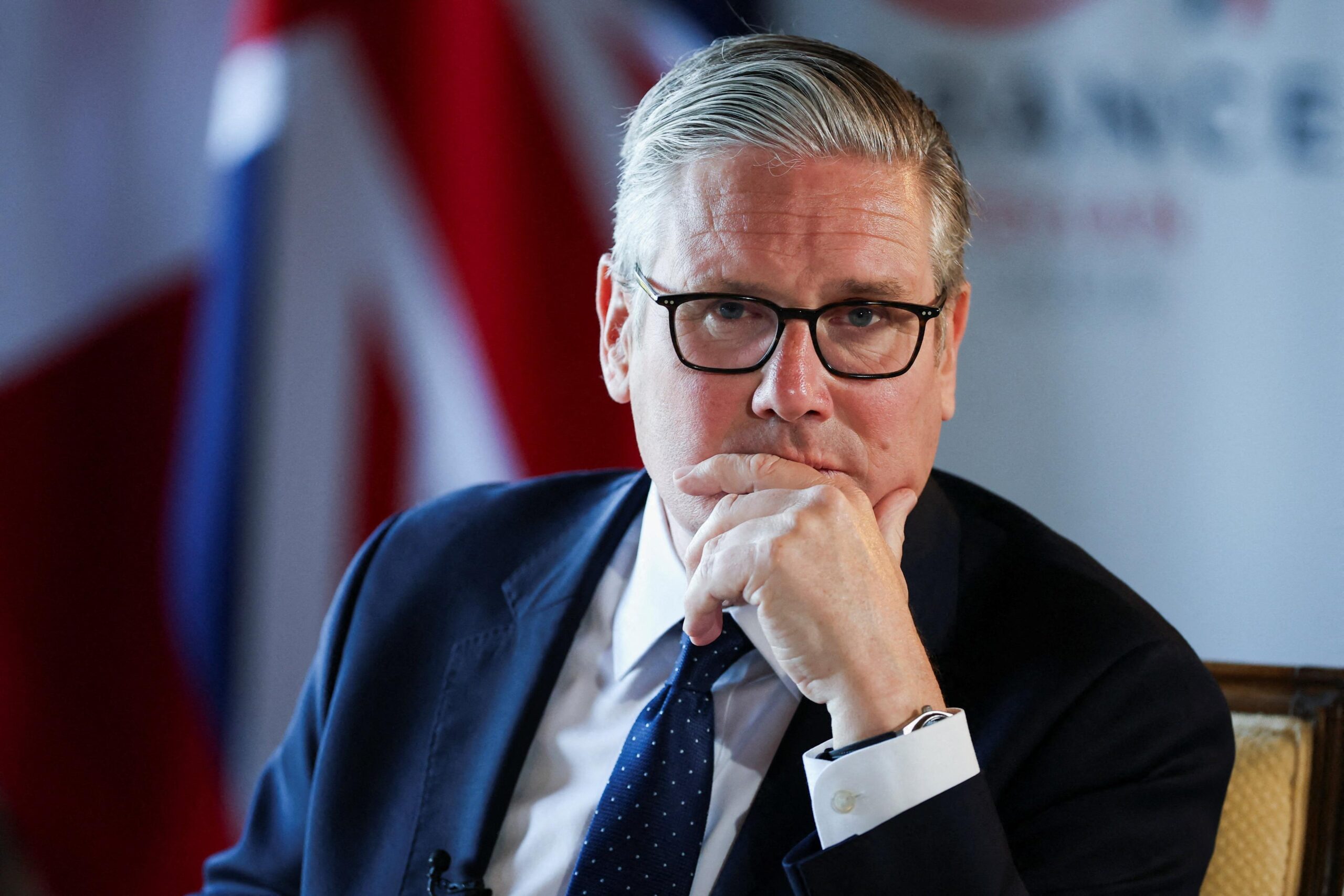
Sir Keir Rodney Starmer is a British lawyer and politician who served as Prime Minister of the United Kingdom from 5 July 2024 to 20 July 2026, leading the Labour Party to its largest parliamentary majority in over two decades before resigning less than two years into office amid heavy local-election losses and mounting pressure within his own party.
Before entering Parliament, he spent more than two decades as a criminal and human rights barrister and five years as Director of Public Prosecutions, the most senior prosecutor in England and Wales.
He stood down as a Member of Parliament in September 2026, ending an eleven-year run in the House of Commons.
Quick Facts
| Full Name | Keir Rodney Starmer |
| Date of Birth | 2 September 1962 |
| Age | 64 |
| Birthplace | Southwark, London, England |
| Nationality | British |
| Party | Labour Party |
| Occupation | Politician, former barrister |
| Education | Reigate Grammar School; University of Leeds (LLB); St Edmund Hall, Oxford (BCL) |
| Spouse | Victoria Alexander (m. 2007) |
| Children | 2 |
| Notable Roles | Director of Public Prosecutions (2008–2013); Leader of the Opposition (2020–2024); Prime Minister (2024–2026) |
Early Life
Keir Starmer was born on 2 September 1962 in Southwark, London, and grew up in the Surrey town of Oxted. His father worked as a toolmaker in a factory, and his mother worked as a nurse for the National Health Service. His mother lived for decades with a severe, rare illness, and Starmer has described the hospital visits and his father’s constant presence at her side as a formative experience of his childhood. He attended Reigate Grammar School and was the first member of his family to attend university.
Outside academics, he was musically active as a child, learning flute, piano, violin and recorder; regional profiles have noted he took violin lessons alongside a young Norman Cook, later known professionally as Fatboy Slim.
Education
Starmer studied law at the University of Leeds, graduating with a first-class degree in 1985, before completing a Bachelor of Civil Law at St Edmund Hall, Oxford, in 1986.
Legal Career
Starmer was called to the bar at Middle Temple in 1987 and built a career focused on criminal defence and human rights law, both in the United Kingdom and abroad. He defended people facing the death penalty in several Caribbean countries and served on the Foreign and Commonwealth Office’s death penalty advisory panel from 2002 to 2008. In 1990 he co-founded Doughty Street Chambers, later serving as its joint head. Among his highest-profile cases was his work on the defence side of the so-called “McLibel” case, in which two environmental activists were sued by McDonald’s over a critical leaflet.
He served as human rights adviser to the Northern Ireland Policing Board from 2003 to 2008, part of the institutional architecture set up after the Good Friday Agreement, a period he later cited as a significant influence on his decision to enter politics. It was also during this period that he met his future wife, Victoria Alexander, who works for the NHS; the couple married in 2007 and have two children, whose names and details Starmer has kept out of public reporting.
In 2002 he was appointed Queen’s Counsel. In 2008 he was appointed Director of Public Prosecutions and head of the Crown Prosecution Service, a position he held until 2013. His tenure included the prosecution of Chris Huhne, a serving cabinet minister, over a speeding-related criminal matter, and the successful prosecution of two of the killers of Stephen Lawrence. He also introduced changes to how the CPS handled allegations of sexual and domestic violence. The CPS’s decision not to prosecute Jimmy Savile during his tenure later became a point of political controversy, including an accusation from then–Prime Minister Boris Johnson in 2022 that was widely criticised as unsubstantiated. Starmer was knighted in the 2014 New Year Honours, becoming a Knight Commander of the Order of the Bath, for services to law and criminal justice, an honour customarily given to holders of the DPP role.
Entry into Politics
Starmer was selected as the Labour Party candidate for Holborn and St Pancras following the retirement of the sitting MP, Frank Dobson, and was first elected to the House of Commons in May 2015 at the age of 52. He served as Shadow Minister for Immigration from 2015 to 2016 and then as Shadow Secretary of State for Exiting the European Union from 2016 to 2020 under party leader Jeremy Corbyn, becoming one of the most prominent Labour voices on Brexit policy.
Leader of the Opposition
Starmer was elected Leader of the Labour Party in April 2020, winning the contest in the first round with 56 percent of the vote, and succeeded Jeremy Corbyn as Leader of the Opposition. Over the following four years he repositioned the party toward the political centre and rebuilt its standing after a heavy 2019 general election defeat, becoming a consistent and effective questioner of successive Conservative prime ministers, Boris Johnson, Liz Truss and Rishi Sunak, including during the “Partygate” controversy over lockdown-breaking gatherings in government.
Prime Minister (2024–2026)
In the general election of July 2024, Labour under Starmer won a landslide victory, taking its largest parliamentary majority in more than two decades and ending fourteen years of Conservative-led government. He was appointed Prime Minister on 5 July 2024, becoming the United Kingdom’s 58th Prime Minister, with Angela Rayner as his initial Deputy Prime Minister and Rachel Reeves as Chancellor of the Exchequer.
His government’s early record included the October 2024 budget, continued military and diplomatic support for Ukraine, and efforts to “reset” relations with the European Union within the boundaries of Labour’s stated red lines against rejoining the single market or customs union. Rayner left the Cabinet in September 2025 and was succeeded as Deputy Prime Minister by David Lammy. By 2025 the government faced a run of difficulties, including cabinet resignations and a diplomatic scandal, and support fell sharply amid pressure from the Reform UK party.
In May 2026, Labour suffered heavy losses of more than 1,000 council seats in local elections, widely read as a public rejection of the government’s record. Pressure for Starmer to step aside intensified after Labour figure Andy Burnham won a decisive victory in the Makerfield by-election on 18 June 2026. On 22 June 2026, Starmer announced he would resign as Labour leader and Prime Minister, saying he accepted his parliamentary party’s judgment “with good grace.” He remained as caretaker Prime Minister during the resulting Labour leadership contest. Andy Burnham succeeded him as Labour leader on 17 July and was sworn in as Prime Minister on 20 July 2026, becoming the UK’s seventh prime minister in a decade.
After Leaving Office
On 1 September 2026, Starmer announced he would also stand down as the MP for Holborn and St Pancras, a seat he had held for eleven years, triggering a by-election. He said the move would let him focus on international affairs, including defence, security, trade and technology.
Personal Life
Starmer lives in the Holborn and St Pancras constituency he represented, and is married to Victoria Alexander, whom he met while working with the Northern Ireland Policing Board; the couple married in 2007 and have two children. He is entitled to use the style “Sir” following his 2014 knighthood but has generally preferred not to use the title in day-to-day political life.
Frequently Asked Questions
Who is Keir Starmer?
He is a British lawyer and politician who served as Prime Minister of the United Kingdom from July 2024 to July 2026 and led the Labour Party from 2020 to 2026.
What was Keir Starmer’s job before politics?
He was a barrister specialising in human rights and criminal law, and later served as Director of Public Prosecutions and head of the Crown Prosecution Service from 2008 to 2013.
Why did Keir Starmer resign as Prime Minister?
He resigned on 22 June 2026 following heavy Labour losses in the May 2026 local elections, cabinet resignations, pressure from Reform UK, and a decisive by-election win for Andy Burnham, who went on to succeed him as party leader and Prime Minister.
Is Keir Starmer still a Member of Parliament?
No. He announced on 1 September 2026 that he was standing down as MP for Holborn and St Pancras, ending eleven years in the House of Commons.
Why is he sometimes called “Sir Keir Starmer”?
He was knighted in the 2014 New Year Honours for services to law and criminal justice, an honour customarily given to former Directors of Public Prosecutions, but he has generally chosen not to use the title.
Conclusion
Starmer’s public life divides into two distinct careers of roughly equal length: two decades as a human rights and criminal barrister culminating in the country’s top prosecuting job, and eleven years in Parliament that took him from backbench MP to Prime Minister and back out of office within a single decade. His premiership produced a historic election victory and an unusually rapid departure from it, a trajectory he himself linked, on leaving the Commons, to a wish to work on international rather than domestic affairs going forward.