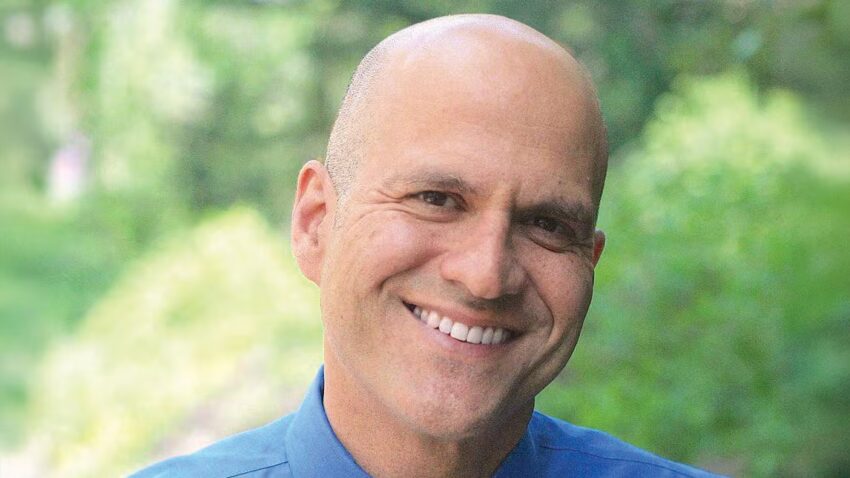
When Farzad Mostashari became the US National Coordinator for Health Information Technology in 2011, fewer than one in ten American hospitals had fully functional electronic health record systems. By the time he left in 2013, that figure had grown to nearly half.
The nationwide push he oversaw, the Meaningful Use Incentive Program, funded by the HITECH Act, is one of the most consequential policy implementations in the history of American medicine. Farzad Mostashari was its architect, and his fingerprints remain on the health data infrastructure that millions of Americans encounter every time they visit a doctor.
Born in Richmond, Virginia, and raised primarily in Iran before immigrating to upstate New York at fourteen, Mostashari combined degrees from Harvard (biochemistry and public health) and Yale (medicine) with front-line public health experience in New York City, investigating West Nile virus outbreaks, developing post-9/11 anthrax surveillance systems, and leading a project that brought electronic health records to over 1,500 physicians in underserved communities.
Since leaving government, he co-founded Aledade in 2014: now the largest network of independent primary care practices in the United States, accountable for over two million patients and credited with generating more than $1 billion in healthcare savings.
Profile
| Full Name | Farzad Mostashari, MD, ScM |
| Birthplace | Richmond, Virginia, USA (raised in Iran; moved to upstate New York at age 14) |
| Nationality | American |
| Occupation | Physician, Epidemiologist, Health Technology Entrepreneur, Policy Leader |
Early Life
Farzad Mostashari was born in Richmond, Virginia, and spent his formative years in Iran, where he excelled in science and mathematics, disciplines held in high regard culturally. At fourteen he immigrated to upstate New York to live with an aunt. He has described with characteristic directness the disorientation of discovering that the academic prowess that made him valued in Iran made him the target of mockery in an American high school. That experience, of being a self-described nerd in a culture that did not share his native land’s reverence for intellectual achievement, gave him a resilience and a clarity of purpose that shaped everything that followed.
Education
Mostashari earned an AB in Biochemistry from Harvard University (1989), a Master of Science in Population Health from the Harvard T.H. Chan School of Public Health (1991), and an MD from the Yale University School of Medicine (1996). He completed his residency in internal medicine at Massachusetts General Hospital from 1996 to 1998, and subsequently joined the CDC’s Epidemiological Intelligence Service, the elite “disease detective” programme, where he investigated infectious disease outbreaks before joining the NYC Department of Health.
Career
At the New York City Department of Health and Mental Hygiene, Mostashari became one of the lead investigators in the West Nile virus outbreak and developed early warning surveillance systems in the wake of the post-9/11 anthrax attacks. He co-developed SaTScan with Martin Kulldorff, a free software programme now used globally for geographical and temporal disease surveillance, and established the Bureau of Epidemiology Services at the NYC Department of Health. His most significant pre-federal contribution was founding the NYC Primary Care Information Project, which equipped over 1,500 physicians in underserved communities with prevention-oriented electronic health records, a proof of concept for what the federal government would later attempt at national scale.
In July 2009, following passage of the HITECH Act, David Blumenthal recruited him as Deputy National Coordinator for Health IT at HHS. He became National Coordinator on April 8, 2011, and oversaw the design and implementation of Stage 1 of the Meaningful Use programme. Under his leadership, hospital EHR adoption grew from 9% to 44% and outpatient adoption from 17% to 40%, a transformation of American medical infrastructure that touched virtually every healthcare setting in the country. He departed in August 2013, served as a visiting fellow at the Brookings Institution, and in 2014 co-founded Aledade. As CEO, he has grown Aledade to serve over 1,500 practices in 45 states, be accountable for more than two million patients, and generate more than $1 billion in documented healthcare savings, establishing it as the largest independent primary care network in the United States. He also serves on the board of Resolve to Save Lives, co-chairs the Health Evolution Summit, and is a Visiting Fellow at Duke-Margolis Center for Health Policy.
Honours & Recognitions
- National Coordinator for Health Information Technology, US HHS (2011–2013)
- Co-developed SaTScan, globally used disease surveillance software
- Raised hospital EHR adoption from 9% to 44% during Meaningful Use programme
- Harvard Kennedy School Top 25 Innovations in Government finalist
- Visiting Fellow, Brookings Institution; Visiting Fellow, Duke-Margolis Center for Health Policy
- Published in: New York Times, JAMA, Health Affairs, American Journal of Public Health
Social Media
- Twitter/X: @Farzad_MD
- LinkedIn: linkedin.com/in/farzad-mostashari
Personal Life
Farzad Mostashari is based in the Washington D.C. area, consistent with his dual career in federal health policy and healthcare entrepreneurship.
He approaches health reform not as an ideological project but as an applied engineering challenge, using data, technology, and smart incentives to solve the problem of how to make care work better for the patients who need it most.
His commitment to underserved communities has been a consistent thread from his NYC Department of Health years through to Aledade’s focus on independent primary care in under-resourced settings.
Net Worth
Farzad Mostashari’s net worth is not publicly disclosed. As co-founder and CEO of Aledade, a company that has raised significant venture capital and grown to serve over two million patients, his equity stake represents the primary component of his financial standing.
His income includes his CEO salary, speaking fees as a leading voice in health information technology and primary care reform, and board and advisory compensation from his institutional roles.
Business Portfolio
- Aledade, Inc. (co-founded 2014, CEO), largest US independent primary care network; 1,500+ practices, 45 states; 2M+ patients; $1B+ in healthcare savings
- Office of the National Coordinator for Health IT, HHS (2009–2013), National Coordinator; led Meaningful Use Programme
- NYC Primary Care Information Project, founded; equipped 1,500+ physicians in underserved communities with EHRs
- SaTScan, co-developed with Martin Kulldorff; global disease surveillance software
- Resolve to Save Lives, Board of Directors
- Duke-Margolis Center for Health Policy, Visiting Fellow
Conclusion
Farzad Mostashari’s career is a sustained argument for the proposition that the most consequential healthcare work happens not in operating rooms alone but in the infrastructure, the data systems, payment models, and information flows, that shape how care is organised at scale.
His work at the NYC Department of Health, his tenure at ONC, and his decade building Aledade have each, in different ways, tried to solve the same problem: how to use data, technology, and smart incentives to make the system work better for the patients who need it most. It is a question that American healthcare is still answering, and he remains one of its most credible voices.