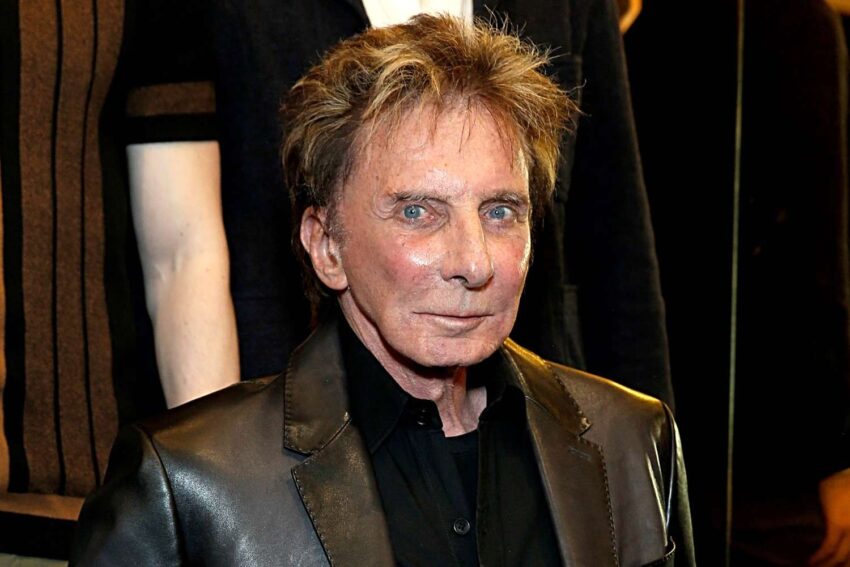
Who Is Barry Manilow?
When Frank Sinatra looked across the music landscape in the 1970s and said “He’s next,” he was talking about Barry Manilow, and history proved him right. Born Barry Alan Pincus in Brooklyn, New York, Manilow would grow from a mailroom clerk at CBS and a writer of television jingles into one of the most commercially successful recording artists of the twentieth century.
With more than 85 million records sold worldwide and 51 Top 40 singles on the Adult Contemporary Chart, Barry Manilow occupies a singular place in the story of American popular music, beloved by millions, occasionally dismissed by critics, and ultimately vindicated by the sheer scale and durability of his career.
Manilow is the architect of some of the most recognisable songs of the past five decades: “Mandy,” “Copacabana (At the Copa),” “I Write the Songs,” “Can’t Smile Without You,” and “Weekend in New England” are just a few of the titles that have become woven into the fabric of American culture. He has earned a Grammy Award, two Emmy Awards, and a Tony Award, and has been inducted into the Songwriters Hall of Fame.
His ability to craft emotionally resonant melodic hooks, honed during years of writing commercial jingles for brands ranging from McDonald’s to Band-Aid, gave his music a quality that critics often underestimated but audiences instinctively felt.
More than half a century after his debut, Barry Manilow remains a working artist navigating the most personal chapters of a remarkable life.
In December 2025, he announced a diagnosis of early-stage lung cancer, underwent surgery, and in mid-2026 revealed that the procedure had left his voice not fully recovered, a development that cast uncertainty over the future of his performing career. Yet his legacy, built across six decades of music, showmanship, and genuine human connection, is in no way diminished by the challenges of age.
Profile
| Full Name | Barry Alan Pincus |
| Stage Name | Barry Manilow |
| Born | June 17, 1943 |
| Age | 83 years old |
| Birthplace | Brooklyn, New York, USA |
| Nationality | American |
| Occupation | Singer, Songwriter, Record Producer, Composer |
| Height | 6 ft 0 in (1.82 m) |
| Religion | Jewish (maternal heritage) |
| Parents | Edna Manilow (mother), Harold Kelliher (father) |
| Spouse | Susan Deixler (m. 1964, annulled 1966); Garry Kief (m. 2014–present) |
| Relationship Status | Married |
| Net Worth | $100 million |
Early Life
Barry Alan Pincus was born on June 17, 1943, in the Williamsburg neighbourhood of Brooklyn, New York. His background was a blend of cultures: his father, Harold Kelliher (who went by the surname of his own stepfather), had a Jewish father and an Irish-American Catholic mother, while his maternal grandparents were of Russian Jewish heritage.
His parents separated when Barry was an infant, and he was raised by his mother, Edna Manilow, and her parents in the heart of Brooklyn. It was from his mother’s family that he would eventually take the surname Manilow, a name that would become one of the most recognised in American popular music.
Growing up in Williamsburg in the 1940s and 1950s, young Barry was immersed in a rich, diverse urban soundscape.
He developed an early fascination with music and taught himself to play the accordion and then the piano, instruments that would become the foundation of his professional craft.
The absence of his father and the modest circumstances of his upbringing gave him a drive and self-reliance that would characterise his entire career. Music, from a very early age, was not just a passion for him; it was a way of making sense of the world and a path toward something better.
His diverse cultural background, Jewish, Irish-Catholic, urban New York, contributed to the musical eclecticism that would later define his sound. Barry Manilow was never a one-genre artist; his ear ranged from classical composition to jazz, from Broadway show tunes to radio pop, and that range gave his work a breadth that outlasted any particular musical trend.
Education
Barry Manilow attended Eastern District High School in Brooklyn, graduating in 1961. He then enrolled at the City College of New York before transferring to the New York College of Music to pursue his love of composition and performance more formally. To fund his studies, he took a part-time job in the mailroom at CBS, a seemingly mundane position that would prove to be one of the most consequential decisions of his life. Working within the CBS building gave him exposure to the world of television production and music publishing, and he made connections that would later serve him well. While employed at CBS, he simultaneously enrolled in evening classes at the prestigious Juilliard School, where he studied musical theatre and orchestration. This combination of formal classical training and real-world industry exposure gave him a professional toolkit that very few pop musicians of his generation could match.
Career
Barry Manilow’s professional career began not on a concert stage but in a recording studio writing jingles. In the late 1960s and early 1970s, before his name meant anything to the general public, he was one of New York’s most in-demand commercial music composers. He wrote and performed jingles for some of the biggest brands in America, including McDonald’s, Pepsi-Cola, Band-Aid, and State Farm. These jingles were not throwaway work, they required the same melodic craft and emotional hook that would later define his pop hits, and they taught him to capture a feeling in the shortest possible time. His jingle for Band-Aid, “I am stuck on Band-Aid brand, ’cause Band-Aid’s stuck on me”, became one of the most enduring advertising earworms in American history.
The turning point that shifted his trajectory from commercial work to pop stardom was his relationship with Bette Midler. The two met when Midler was performing in New York’s bathhouses and clubs in the early 1970s, and Manilow became her pianist, musical director, and arranger. His work on her debut album, “The Divine Miss M” (1973), which received a Grammy nomination, demonstrated his abilities to a wider industry audience and established him as a significant musical force behind the scenes. It also gave him the confidence to pursue a recording career of his own.
Manilow released his self-titled debut album in 1973, but the real breakthrough came with a strategic repositioning by Clive Davis at Bell Records (which later became Arista Records). A ballad called “Brandy” was renamed “Mandy” to avoid confusion with a pre-existing hit, and the retitled song was released in 1974. It became Manilow’s first number-one single and transformed him overnight from a respected industry professional into a mainstream pop star. The song’s emotional directness, melodic simplicity, and Manilow’s heartfelt delivery connected with listeners in a way that no industry calculation could fully explain.
What followed was one of the most productive runs in the history of adult contemporary music. Throughout the second half of the 1970s, Manilow released a succession of chart-topping albums and singles that made him one of the best-selling artists on the planet. “Barry Manilow II,” “Tryin’ to Get the Feeling,” “This One’s for You,” “Even Now,” “One Voice,” and “If I Should Love Again” were all major commercial successes. His singles dominated the Adult Contemporary Chart, and several crossed over to the mainstream pop charts as well. Between 1974 and 1983, he recorded six consecutive platinum albums, a commercial streak that very few artists have matched in any era.
As a live performer, Manilow developed a reputation for theatrical, intimate concerts that connected deeply with his largely female fan base. He understood stagecraft instinctively, using humour, personal anecdotes, and direct audience engagement to make enormous venues feel like an evening among friends. His 1977 live album, “Barry Manilow Live,” reached number one on the charts and demonstrated that his concert experience was as commercially compelling as his studio recordings. He performed on Broadway at the Gershwin Theatre in 1989, running for 44 performances, and later secured a long-running and enormously lucrative residency at the Las Vegas Hilton and the Paris Las Vegas Hotel, where he reportedly earned as much as $20 million per year at the peak of the arrangement.
As musical tastes shifted through the 1980s and 1990s, Manilow evolved as an artist rather than trying to chase trends he was not suited to. He explored swing music, jazz, Broadway standards, and concept albums celebrating the Great American Songbook. He produced albums for other artists, including Bette Midler and Dionne Warwick, and composed original music for animated films, including a song for Bette Midler’s character in the 1988 Walt Disney feature “Oliver & Company.” In December 2025, he announced a forthcoming album titled “What a Time,” releasing a single called “Once Before I Go” in September 2025. However, his lung cancer diagnosis in December 2025 and subsequent surgery raised questions about whether his voice, one of the most distinctive instruments in popular music, would fully recover.
Awards & Nominations
- Grammy Award, Best Male Pop Vocal Performance, “Copacabana (At the Copa)” (1979)
- 15 Grammy Award nominations across his career
- Tony Award, for the Broadway musical “Harmony”
- Two Emmy Awards for television specials
- Inducted into the Songwriters Hall of Fame
- Named one of the best-selling music artists of all time with over 85 million records sold
- 51 Adult Contemporary Top 40 singles, including 13 number-one hits
- 13 platinum albums; six multi-platinum albums
- Named “King of Adult Contemporary” by multiple music publications
Social Media
Barry Manilow maintains an active presence across major social media platforms, keeping his loyal fanbase engaged with updates on his music, health, and touring activities.
- Facebook: @BarryManilow
- Twitter/X: @barrymanilow
- Instagram: @barrymanilow
- Official Website: barrymanilow.com
Personal Life
Barry Manilow’s personal life was kept intensely private for decades, a reflection of a deliberate decision he made early in his career and maintained for more than thirty years. He first married his high school sweetheart, Susan Deixler, in 1964, but the marriage was annulled in 1966. By his own account, he was genuinely in love with her but found that his consuming passion for a music career and his personal immaturity made the relationship unsustainable. He has described leaving someone he considered “the perfect wife” as one of his great regrets.
In 1978, Manilow began a relationship with television executive Garry Kief, who subsequently became his personal manager. The two men maintained a deeply committed partnership for decades without making it public. They married in a private ceremony in April 2014, after same-sex marriage became legal in California, but the marriage remained a secret until it was reported in 2015. In April 2017, Manilow formally came out as gay in an interview with People magazine, explaining that he had feared his sexuality would disappoint his predominantly female fan base and disrupt the connection he felt with them. His openness when he did speak was characterised by warmth and honesty about his own journey.
In December 2025, Manilow announced that he had been diagnosed with early-stage lung cancer, a significant personal health challenge that he addressed publicly with his characteristic directness. He revealed that the cancer had been discovered by chance while he was undergoing treatment for bronchitis and that, because it was caught early, he had hoped to avoid chemotherapy or radiation. Following surgery, however, he disclosed in mid-2026 that his voice had not recovered as expected, creating genuine uncertainty about the future of his performing career.
Net Worth
Barry Manilow’s estimated net worth stands at approximately $100 million as of 2025, a figure that reflects the extraordinary commercial longevity of a six-decade career.
His wealth has been built through multiple streams: album sales and royalties from a catalog that has sold over 85 million copies worldwide; concert touring, including sell-out performances at major venues from Radio City Music Hall to the Royal Albert Hall; his long-running Las Vegas residency, which reportedly generated as much as $10–20 million per year at various points; and income from licensing his music for films, television programmes, and commercial use.
His early jingle writing, for brands including McDonald’s, Pepsi, and Band-Aid, also generated ongoing residual income that contributed to his financial foundation.
Beyond music, Manilow has invested in real estate, including properties in Palm Springs, California, and has been recognised for his philanthropic activities through the Manilow Music Project, which has donated thousands of musical instruments to schools across the United States.
Discography
- “Barry Manilow” (1973), debut album
- “Barry Manilow II” (1974), breakthrough album featuring “Mandy”
- “Tryin’ to Get the Feeling” (1975)
- “This One’s for You” (1976)
- “Barry Manilow Live” (1977), number-one live album
- “Even Now” (1978)
- “One Voice” (1979)
- “If I Should Love Again” (1981)
- “Copacabana” (musical, 1985/1994)
- “Here at the Mayflower” (2001)
- “The Greatest Songs of the Sixties” (2006)
- “My Dream Duets” (2014)
- “This Is My Town: Songs of New York” (2017)
- “What a Time” (forthcoming, announced 2025)
- Key singles: “Mandy” (1974), “Could It Be Magic” (1975), “I Write the Songs” (1975), “Looks Like We Made It” (1977), “Can’t Smile Without You” (1978), “Copacabana (At the Copa)” (1978), “Weekend in New England” (1976)
Conclusion
Barry Manilow’s story is ultimately one of persistence against the weight of critical fashion. In an era when credibility was often defined by what critics approved of, Manilow simply kept making music that tens of millions of people loved, and he was rewarded with a career of extraordinary duration and impact.
The number one records, the Grammy Award, the Las Vegas residencies, the sold-out world tours, and the 85 million albums represent not just commercial success but a genuine and deep connection between an artist and the people who found something meaningful in his songs.
As he navigates the health challenges of his early eighties, the lung cancer diagnosis, the surgery, and the uncertainty about his voice, Barry Manilow faces a new kind of test.
But whatever the future holds, his place in the history of American popular music is already secure. Frank Sinatra saw it coming fifty years ago, and millions of fans around the world have spent half a century proving him right.