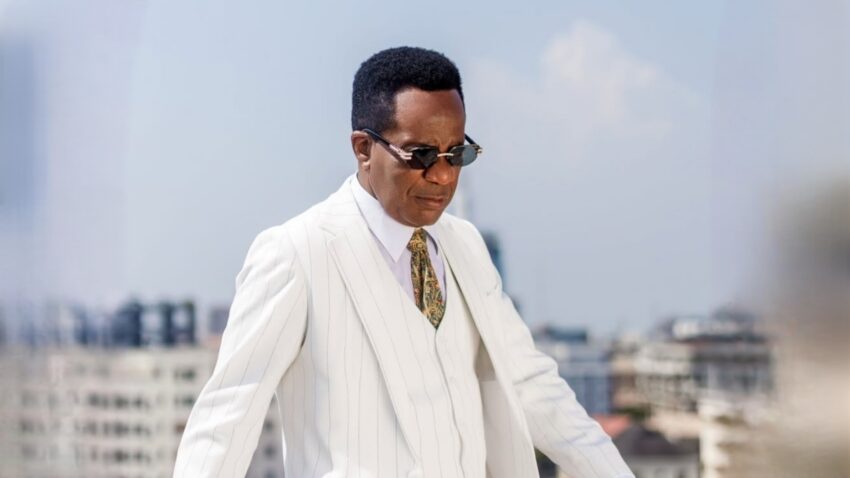
Keji Hamilton is one of Nigeria’s most remarkable and multi-dimensional public figures, a veteran Afrobeat musician, former member of Fela Anikulapo Kuti’s iconic Egypt 80 band, drug rehabilitation advocate, pastor, and founder of the Global Centre for Drug Eradication (GCDE).
His life story, from a devout Muslim boy with dreams of becoming a pharmacist, to a hardened member of Fela’s Kalakuta Republic and a career criminal battling severe addiction, to a born-again Christian pastor and anti-drug crusader, is one of the most dramatic and inspiring redemption narratives in Nigerian history.
Today, Keji Hamilton continues to make music under the Afrobeat banner, most recently releasing “Agbaya People” in June 2026, a single that demonstrates his enduring creative vitality and commitment to social commentary.
Profile
| Full Name | Suleiman Shuaib (birth name); Morounkeji Hamilton (adopted name) |
| Stage Name | Keji Hamilton |
| Birthplace | Nigeria |
| State of Origin | Not publicly specified |
| Nationality | Nigerian |
| Occupation | Musician, Pastor, Drug Rehabilitation Advocate, NGO Founder |
| Religion | Christianity (born-again; formerly Muslim) |
| Parents | Father was a Chief Imam (Muslim religious leader) |
| Spouse | Favour Hamilton |
| Children | Two daughters, Mrs Toju Jack and Miss Kimberly Hamilton |
| Relationship | Married |
Early Life
Keji Hamilton was born Suleiman Shuaib in Nigeria, the son of a Chief Imam who raised his family in devout Islamic faith. From childhood, he showed academic promise and intellectual curiosity, dreaming of a future as a pharmacist.
He gained admission to the prestigious University of Ibadan in 1981 to study Pharmacy, a milestone that represented both his own ambitions and his father’s deepest hopes for his future.
However, his trajectory changed dramatically when he encountered a book by Kwame Nkrumah that argued against Western education for Black Africans. The text ignited a crisis of purpose in the young Suleiman, causing him to question the academic path he had been following.
After spending just one session at the University of Ibadan, he made the life-altering decision to abandon his studies and pursue music, a passion his deeply religious father strongly opposed. Defying his family, he made his way to the Kalakuta Republic, the legendary Lagos compound of the Africa 80 band fronted by Fela Anikulapo Kuti, the father of Afrobeat, and one of Africa’s most radical cultural and political movements.
It was Fela’s son Femi who introduced the young Suleiman to his father. Fela gave him a room at the Kalakuta Republic. He adopted the name “Morounkeji” (later shortened to Keji), expressing his desire to become “the second Fela”, and took “Hamilton” in honour of George Hamilton, a founding figure he admired. And so Keji Hamilton was born.
Education
Keji Hamilton gained admission to the University of Ibadan in 1981 to study Pharmacy but left after one session to pursue music.
He had no formal musical training when he arrived at Fela’s compound, but his love of reading, drawing voraciously from Fela’s library of revolutionary, spiritual, and philosophical texts, combined with raw talent and relentless self-practice, allowed him to develop into a world-class multi-instrumentalist within the Egypt 80 collective.
Career
Keji Hamilton became a key member of Fela Anikulapo Kuti’s Egypt 80 band, one of the most celebrated musical ensembles in African history. As both lead guitarist and pianist, he was integral to the band’s internationally acclaimed sound, performing on stages across West Africa, the United States (East Coast and West Coast), North America, and Europe, including France, Germany, Italy, and the Netherlands. His decade-plus with the Egypt 80 band gave him unparalleled live performance experience and a deep mastery of Afrobeat’s musical architecture.
However, Keji’s years inside the Kalakuta Republic also exposed him to the drug lifestyle prevalent in that environment. He was introduced to marijuana and progressively developed a severe addiction that extended to cocaine, heroin, and other substances. His addiction led to a spiral of criminal behaviour, including armed robbery, as he sought money to fund his dependency. He was arrested and detained multiple times and was, by his own account, at one point marked for elimination by law enforcement officers due to the severity of his crimes.
His transformation came on 7 May 1994, when he experienced what he describes as a supernatural encounter with Christ in a brothel that broke the hold of addiction over his life. He has remained sober ever since. In the years that followed, Keji Hamilton redirected his energy entirely toward recovery, rehabilitation advocacy, and ministry. He founded the Global Centre for Drug Eradication (GCDE), a registered NGO in Nigeria, and served as Project Director of the House of Joy Rehabilitation Centre, a 45-bed in-patient drug treatment facility. He also became the Senior Pastor of Tabernacle of Prayer Global Ministries, travelling widely to speak at crusades, seminars, and conferences.
After a thirteen-year absence from the public musical eye, Keji Hamilton made a triumphant return to Afrobeat in early 2008 with his self-titled album Keji, recorded at an analogue studio in Lagos with his Exousia Band. The album, 46 minutes of traditional Afrobeat music blending jazz horns, keyboards, and African rhythmic percussion, was acclaimed as a powerful revival of roots Afrobeat in the tradition of Fela. In June 2026, he released a new single, “Agbaya People”, through HIS Media Empire, a socially conscious track that examines everyday Nigerian attitudes, choices, and behaviours through humour, rhythm, and storytelling. The single is available on all major streaming platforms.
Social Media
Keji Hamilton maintains a presence on Instagram under the handle @kejihamilton_, where he shares updates on his music, ministry, and advocacy work.
His music has gained renewed attention on streaming platforms with the June 2026 release of “Agbaya People,” attracting new listeners from the global Afrobeat community as well as audiences discovering his extraordinary life story for the first time.
Personal Life
Keji Hamilton is married to Favour Hamilton, and together they are blessed with two daughters, Mrs Toju Jack and Miss Kimberly Hamilton. His family life reflects the remarkable transformation he has undergone: from the chaotic and dangerous years inside Fela’s Kalakuta Republic and the depths of addiction and criminality, to the stability, purpose, and faith-driven existence he leads today. He is an active pastor and anti-drug advocate, and his personal testimony, delivered at churches, conferences, and rehabilitation centres, continues to transform lives across Nigeria and beyond. His story has been covered extensively in Nigerian media, including Vanguard and The Guardian Nigeria.
Net Worth
Keji Hamilton’s net worth is not publicly documented. His income derives from multiple streams: music royalties and streaming revenue, live performances, pastoral ministry, speaking engagements at conferences and seminars, and his work with the Global Centre for Drug Eradication. While he is not among Nigeria’s wealthiest entertainers, his social and cultural capital, built over more than 25 years as a musician, minister, and humanitarian, represents an incalculable contribution to Nigerian society. The release of “Agbaya People” in 2026 through HIS Media Empire signals a renewed focus on building his musical legacy and expanding his digital revenue footprint.
Discography
- Keji (2008) — Self-titled album with the Exousia Band. 46 minutes of traditional Afrobeat music blending jazz horns, keyboards, and African rhythmic percussion. Recorded at an analogue studio in Lagos.
- “Agbaya People” (June 2026) — New single released through HIS Media Empire. Available on all major streaming platforms.
- Live performance recordings and contributions as guitarist and pianist with Fela Kuti’s Egypt 80 Band (approximately 1981–1994).
Conclusion
Keji Hamilton’s biography is not merely a story about music, it is a story about the profound and terrifying depths a human being can sink to, and the equally profound heights that redemption, faith, and purpose can carry them back to.
From the radical walls of Fela’s Kalakuta Republic, through the darkness of addiction and criminality, to the pulpit of ministry and the podium of public health advocacy, Keji Hamilton has lived multiple lives in one.
His enduring love for Afrobeat, the genre that both drew him into darkness and now carries him back into the light, connects all the chapters of his extraordinary story.
With “Agbaya People” signalling a creative resurgence in 2026, Keji Hamilton reminds the world that great art and great resilience often walk the same road.