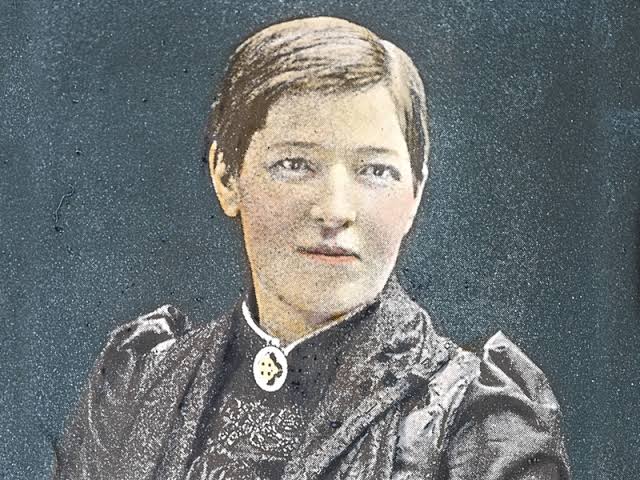
In the late 19th century, in a region of southeastern Nigeria where the birth of twins was widely feared as a curse, a small, red-haired Scottish woman walked barefoot through the forest to rescue abandoned infants from death. That woman was Mary Slessor, a missionary whose nearly four decades of work in Calabar made her one of the most celebrated figures in the shared history of Scotland and Nigeria.
Mary Slessor is best known for her fight against the practice of twin infanticide in the Okoyong region of what is now Cross River State, Nigeria, as well as her pioneering role in promoting women’s rights and education in the area. Unlike many missionaries of her era, she chose to live among the people she served, learning their language and adopting many of their customs rather than imposing her own from a distance.
Her story continues to matter because it illustrates a missionary life shaped less by doctrine and more by direct, hands-on compassion. To this day, she is remembered in parts of Nigeria as “Mother of All the Peoples,” while in Scotland her image still appears on banknotes and statues, a rare dual legacy spanning two continents.
Profile
| Full Name | Mary Mitchell Slessor |
| Born | 2 December 1848 |
| Birthplace | Gilcomston, Aberdeen, Scotland |
| Nationality | Scottish (British) |
| Occupation | Presbyterian Missionary, Teacher, Vice Consul |
| Religion | Presbyterian Christian |
| Parents | Robert Slessor (shoemaker), Mary Slessor (née Smith) |
| Siblings | Six siblings (one of seven children; only four survived childhood) |
| Children | Adopted several children, including a daughter named Janie |
| Date of Death | 13 January 1915, Use Ikot Oku, Calabar, Nigeria |
Early Life
Mary Mitchell Slessor was born on 2 December 1848 in Gilcomston, a suburb of Aberdeen, Scotland, the second of seven children born to Robert Slessor, a shoemaker, and his deeply religious wife, Mary.
Only four of the seven children survived to adulthood. Her father struggled with alcoholism and unemployment, and when Mary was about eleven years old, the family relocated to Dundee, where he found work in the city’s jute mills.
Life in Dundee’s slums was difficult. By the age of fourteen, Mary had become a skilled jute mill worker, labouring from six in the morning until six at night with only brief breaks, while still finding time in the evenings to attend school and develop her reading.
Her father and both of her brothers eventually died of pneumonia, leaving Mary, her mother, and two sisters to support one another. Her mother’s devotion to the United Presbyterian Church and its missionary publications planted the seeds of a calling that would define the rest of Mary’s life.
Education
Mary Slessor received only a limited formal education, attending school part-time around her long hours in the jute mills.
She continued to educate herself through evening Bible classes and extensive reading, drawing particular inspiration from accounts of missionary work in Africa, including the stories of the explorer and missionary David Livingstone.
Before departing for Calabar, she received several months of formal missionary training in Scotland to prepare her for the journey.
Career
Inspired by the death of David Livingstone in 1873, Mary Slessor applied to the Foreign Mission Board of the United Presbyterian Church of Scotland and was accepted as a missionary to Calabar, in present-day southeastern Nigeria. On 5 August 1876, at the age of 27, she sailed from Scotland aboard the S.S. Ethiopia, arriving in Calabar a little over a month later to begin work that would span nearly four decades.
Slessor’s early years were spent in established mission stations in Old Town and Creek Town, where she focused on teaching and learning Efik, the dominant local language. Unlike many of her European colleagues, she made a deliberate choice to live among the Efik people rather than remain within the relative comfort of the mission compound, eating local food and adopting many local customs in order to build trust. She contracted malaria during this period and was forced to return temporarily to Scotland to recover before resuming her work in Calabar.
Slessor’s most defining chapter began when she requested a transfer deeper into the interior, to the Okoyong region, an area so feared by other missionaries due to past violence that none had previously dared to settle there. She moved into Okoyong in 1886, shortly after the deaths of her mother and last surviving sister in Scotland left her with no immediate family ties pulling her home. In Okoyong, she confronted deeply held local beliefs that the birth of twins was a curse, with communities often abandoning both infants in the bush rather than risk harbouring what was believed to be a “devil child.” Slessor personally adopted every abandoned twin she could find, while organising “twins’ missioners” to search for and rescue more infants, eventually filling her mission compound with rescued children.
Her influence in Okoyong extended well beyond child protection. She became deeply involved in local governance and dispute resolution, eventually being appointed vice consul by British colonial authorities, a role that granted her judicial authority over local matters, an extraordinary position for a woman, and a missionary, to hold at the time. She used this influence to challenge other harmful practices, including human sacrifice at the deaths of village elders, while also advocating consistently for women’s rights and access to education in a region where such opportunities had been extremely limited.
Slessor continued her missionary and humanitarian work in increasingly remote parts of Calabar until her death in 1915, having earned the trust and affection of the communities she served to a degree rarely achieved by foreign missionaries of her era.
Honours & Recognitions
- Featured on the back of the Clydesdale Bank £10 note as part of its World Heritage and Famous Scots series (1997)
- Bust placed in the Hall of Heroes at the National Wallace Monument, Stirling, Scotland
- Named one of the millennium persons of Calabar, Nigeria (2000)
- Mary Slessor Hall, a female hostel at the University of Nigeria, Nsukka, named in her honour
- Slessor House at Achimota School, Ghana, named after her
- Streets named in her honour in Glasgow, Dundee, and Oldmeldrum, Scotland, and in Coventry, England
- Slessor Gardens, a city centre park in Dundee, named in her memory
Personal Life
Mary Slessor never married, devoting her adult life almost entirely to her missionary work in Nigeria. She did, however, build a family of her own through adoption, rescuing numerous abandoned twins over the years and raising several as her own children. One of these children, a girl she named Janie, became particularly close to Slessor and even accompanied her on at least one return visit to Scotland.
Known for her physically small stature and famously timid personal habits, including a fear of crossing roads alone, Slessor nonetheless displayed extraordinary courage in venturing into regions of Nigeria that other European missionaries considered too dangerous to enter. She often discarded typical Western precautions, walking barefoot, drinking unboiled water, and forgoing mosquito nets, choices that reflected her commitment to living as closely as possible to the people she served, even at cost to her own health.
She suffered repeated bouts of malaria and other illnesses throughout her time in Nigeria, periodically returning to Scotland to recover before resuming her work. She died on 13 January 1915 at Use Ikot Oku in the Calabar region, where she was given what amounted to a state funeral, a profound tribute to the depth of the relationship she had built with the local community over nearly forty years.
Net Worth
Mary Slessor lived a life of deliberate poverty by Western standards, redirecting a significant portion of her modest missionary salary to support her mother and sisters back in Scotland, and later economising further so she could fund her work among the people of Okoyong.
She left behind no significant personal wealth, having dedicated her income and resources almost entirely to her mission, the children she rescued, and the communities she served.
Notable Projects & Contributions
- Pioneered the rescue and adoption of abandoned twins in the Okoyong region of Cross River State
- Helped reduce the practice of infanticide linked to twin births in southeastern Nigeria
- Advanced women’s rights and access to education for girls in colonial-era Calabar
- Served as vice consul, exercising judicial authority in local governance matters
- Helped open the way for further Christian missionary expansion across West Africa
FAQs
Who was Mary Slessor?
She was a Scottish Presbyterian missionary who spent nearly forty years in Calabar, southeastern Nigeria, known for rescuing twins from infanticide and promoting women’s rights.
When did Mary Slessor die?
She died on 13 January 1915 in Use Ikot Oku, Calabar, Nigeria, at the age of 66.
Did Mary Slessor have children?
She never married, but she adopted several rescued children during her time in Nigeria, including a daughter she named Janie.
Why is Mary Slessor remembered in Nigeria?
She is remembered for stopping the abandonment of twin infants and for her advocacy for women and children in the Cross River region.
Conclusion
Mary Slessor’s life stands as one of the most remarkable examples of cross-cultural devotion in 19th-century missionary history.
From a childhood of poverty in the slums of Dundee to a position of real influence and trust in the Nigerian communities she served, her journey reflects both personal courage and a willingness to live according to the needs of the people around her rather than imposing her own customs.
More than a century after her death, Mary Slessor’s legacy endures in the institutions, memorials, and communities that bear her name across both Scotland and Nigeria, a lasting testament to a life defined by service that crossed continents and cultures.