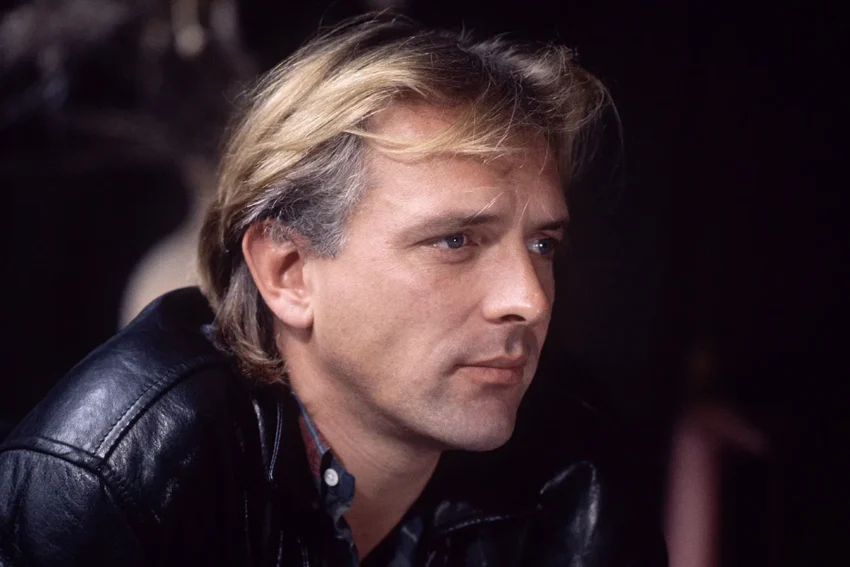
When Rik Mayall died suddenly in June 2014, The Guardian wrote that his on-screen performances were “so full of life,” noting his characters weren’t neatly drawn sketches but “vast mad scribbles, jammed to the margins with noise and energy.” More than a decade later, that description still captures why Mayall remains one of the most fondly remembered figures in British comedy.
Rik Mayall was an English comedian, actor, and writer who, alongside his long-time comedy partner Adrian Edmondson, helped pioneer the alternative comedy movement of the 1980s. He is best remembered for starring roles in The Young Ones, The New Statesman, and Bottom, as well as his unforgettable cameo appearances in the historical sitcom Blackadder.
His story matters because he represented a genuine break from the gentler, more traditional style of British comedy that came before him. With his loud, grotesque, and unapologetically over-the-top characters, Mayall helped redefine what television comedy in Britain could look and sound like, influencing a generation of performers who followed.
Profile
| Full Name | Richard Michael Mayall |
| Born | 7 March 1958 |
| Birthplace | Harlow, Essex, England |
| Nationality | British (English) |
| Occupation | Comedian, Actor, Writer |
| Parents | John Mayall, Gillian Mayall (née Harrild), both drama teachers |
| Spouse | Barbara Robbin (married 1985) |
| Children | Three: Rosie, Sidney, and Bonnie |
| Date of Death | 9 June 2014, London, England |
Early Life
Richard Michael Mayall was born on 7 March 1958 in Harlow, Essex, England, the second child of John Mayall and Gillian Mayall, both of whom worked as drama teachers.
Growing up in a household steeped in performance, Mayall made his acting debut at the remarkably young age of seven, appearing in one of his father’s stage plays, an early indication of the theatrical instincts that would define his later career.
His upbringing around drama and performance gave him an early comfort with the stage that few of his future comedy peers shared from such a young age.
This grounding in formal theatre, paired with a natural taste for the absurd and the anarchic, would later combine into the distinctive comedic style for which he became known.
Education
Mayall studied at Manchester University, where he met fellow student Adrian Edmondson, beginning a creative partnership that would shape the course of British comedy for the next three decades.
It was during their time at university that the pair first began performing together, developing the chemistry and shared comic sensibility that would later define some of their most celebrated work.
Career
After graduating, Mayall and Edmondson built their reputation performing at The Comedy Store in London from 1980 onward. Beyond their double act, known as 20th Century Coyote, Mayall developed memorable solo characters, including the deadpan everyman Kevin Turvey and a pompous anarchist poet named Rick, both of which helped establish his early comic identity. Mayall’s Kevin Turvey character earned a regular slot on the television programme A Kick Up the Eighties, first broadcast in 1981.
In 1981, Mayall, Edmondson, comedian Alexei Sayle, and several other emerging performers, including Nigel Planer, Peter Richardson, Dawn French, and Jennifer Saunders, founded their own comedy club, The Comic Strip, based at the Raymond Revuebar in Soho. The collective’s popularity led to Channel 4 offering them their own television show, The Comic Strip Presents…, which debuted in 1982 and continued, in occasional instalments, until 2012.
Mayall’s defining breakthrough came that same year, 1982, with The Young Ones, a surreal BBC Two sitcom about four mismatched students sharing a squalid flat at the fictional Scumbag College. Mayall played the pretentious, politics-obsessed sociology student Rick, locked in a battle of mutual contempt with Edmondson’s violent punk character Vyvyan, while both shared disdain for their pacifist hippie flatmate Neil, played by Nigel Planer. The show, which Mayall co-wrote, ran for two series until 1984 and later found further life through broadcast on MTV in the United States, becoming a touchstone of British alternative comedy.
Throughout the 1980s, Mayall continued working extensively across British television. He appeared as Mad Gerald in a 1983 episode of the historical sitcom Blackadder, and returned in 1986 to play the loud, lecherous Lord Flashheart in a memorable episode of Blackadder II, a role frequently cited as one of the most scene-stealing guest performances in British sitcom history. In 1987, he won a BAFTA Award for his portrayal of the extreme right-wing, morally bankrupt politician Alan B’Stard in The New Statesman, a satirical sitcom that ran until 1994 and became one of his most iconic creations.
From 1989 to 1991, Mayall narrated the children’s television series Grim Tales, adapting stories from the Brothers Grimm, before pursuing his first major Hollywood opportunity in 1991 with the dark romantic comedy Drop Dead Fred, in which he starred opposite Phoebe Cates. Though not a critical success on release, the film developed a lasting cult following over subsequent decades. Mayall returned to more familiar territory that same year with Bottom, a slapstick odd-couple sitcom co-created with and starring Edmondson, which ran until 1995 and became one of the most enduringly popular shows of his career, eventually extending into live stage tours the pair performed together for years afterward.
In 1996, Mayall provided the voice of Mr. Toad in the animated film The Willows in Winter, a sequel to an earlier adaptation of The Wind in the Willows in which he had also voiced Toad; the performance earned him a Primetime Emmy Award for Outstanding Voice-Over Performance in 1997. In 1998, while riding a quad bike at his farm in Devon, Mayall suffered a serious accident that left him in a coma for several days; he recovered and returned to work, reuniting with Edmondson for the film Guest House Paradiso in 1999. He went on to provide voice work for the animated series Watership Down (1999–2000) and King Arthur’s Disasters (2005–06), while continuing stage tours of Bottom and maintaining a steady presence on British television through guest appearances and commercials into the 2000s.
Awards & Nominations
- BAFTA Award winner, for The New Statesman (1987)
- Primetime Emmy Award, Outstanding Voice-Over Performance — The Willows in Winter (1997)
- Voted among the Top 50 comedy performers of all time, Channel 4’s Comedians’ Comedian poll (2005)
- Ranked 91st in a “Top 100 Stand-Up Comedians” poll (2010)
Personal Life
Rik Mayall married make-up artist Barbara Robbin in 1985, having met her while filming A Kick Up the Eighties. The couple entered into a relationship while Mayall was still involved with girlfriend Lise Mayer; he ended that relationship after learning Robbin was pregnant with their first child. Mayall and Robbin went on to have three children together: Rosie, Sidney, and Bonnie.
Mayall was also known for his charitable work, supporting causes including the Teenage Cancer Trust and the Alzheimer’s Society, and for his lesser-known passion for poetry, having written his own collection titled The Rik Mayall Presents. His 1998 quad bike accident, which left him in a coma, was a significant and sobering chapter in his personal life, though he ultimately made a full recovery and returned to performing.
On 9 June 2014, Mayall died suddenly at his home in London following a heart attack, shortly after returning from a morning jog. He was 56 years old. In accordance with his wishes, he was buried at his family’s estate, Pasture Farm, in East Allington, Devon, following a funeral held on 19 June 2014 at St. George’s Church in Dittisham, Devon, attended by close friends and collaborators including Dawn French, Jennifer Saunders, Alan Rickman, and his long-time comedy partner Adrian Edmondson, who served as a pallbearer.
Net Worth
Specific figures for Rik Mayall’s net worth at the time of his death were not widely publicised, though his estate would have reflected earnings accumulated over more than three decades of work across television, film, voice acting, and live touring. His income streams included his long-running television roles, his Emmy-winning voice work, his film career, and his extensive stage tours with Adrian Edmondson performing Bottom to audiences across the United Kingdom.
Filmography & Notable Works
- The Young Ones (1982–1984) — as Rick
- The Comic Strip Presents… (1983–2012)
- Blackadder (1983) and Blackadder II (1986) — as Mad Gerald and Lord Flashheart
- Filthy Rich & Catflap (1987)
- The New Statesman (1987–1994) — as Alan B’Stard
- Drop Dead Fred (1991)
- Bottom (1991–1995)
- The Willows in Winter (1996, voice) — as Mr. Toad
- Guest House Paradiso (1999)
- Watership Down (1999–2000, voice) — as Kehaar
- Believe Nothing (2002)
- King Arthur’s Disasters (2005–06, voice) — as King Arthur
FAQs
How did Rik Mayall die?
He died of a sudden heart attack at his London home on 9 June 2014, at the age of 56, shortly after returning from a morning jog.
What is Rik Mayall best known for?
He is best known for The Young Ones, The New Statesman, Bottom, and his memorable guest appearances in Blackadder.
Was Rik Mayall married?
Yes, he married make-up artist Barbara Robbin in 1985, and the couple had three children together.
Did Rik Mayall win any major awards?
Yes, he won a BAFTA Award for The New Statesman and a Primetime Emmy Award for his voice work in The Willows in Winter.
Conclusion
Rik Mayall’s career helped define an entire era of British comedy, moving the genre away from gentler traditions and into louder, stranger, and more anarchic territory.
His characters, whether Rick the pretentious poet, Alan B’Stard the scheming politician, or Lord Flashheart the swaggering war hero, remain instantly recognisable decades after they first aired.
More than ten years after his unexpected death, Mayall continues to be celebrated through tributes, comedy festivals held in his honour, and the enduring popularity of his most iconic shows.
His influence on the alternative comedy movement, and on the generation of performers who followed him, ensures his place as one of the most distinctive and important figures in British television history.