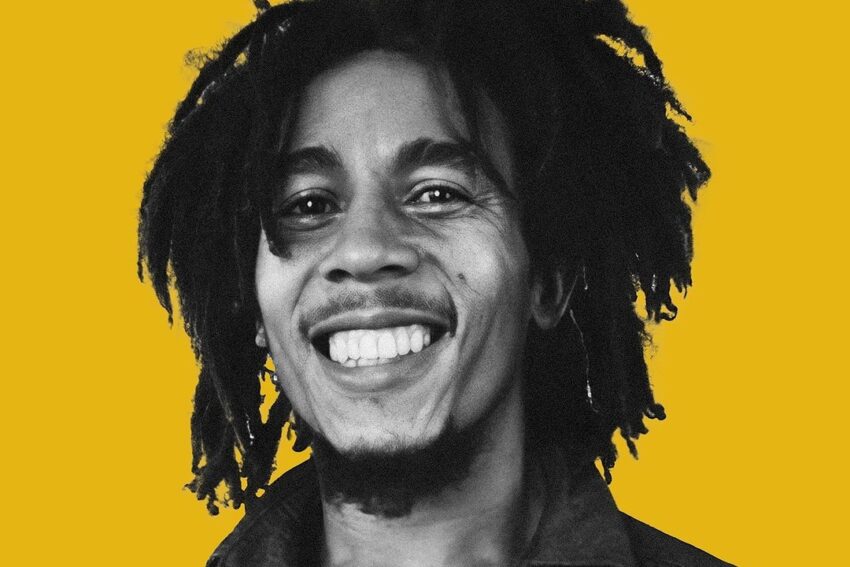
Bob Marley is the most influential figure in the history of reggae music and one of the most iconic musicians of the 20th century.
Born Robert Nesta Marley on February 6, 1945, in Nine Mile, Saint Ann Parish, Jamaica, he transformed a local Jamaican musical tradition into a global phenomenon, spreading the messages of resistance, love, and spiritual freedom to hundreds of millions of people across the planet.
His music reached corners of the world that no Jamaican artist had ever touched, and his image, the dreadlocked, guitar-playing prophet of peace, became one of the most recognisable cultural symbols of the latter half of the 20th century.
Through songs including No Woman, No Cry; Redemption Song; One Love; Get Up, Stand Up; and many others, Marley articulated with extraordinary clarity the aspirations of the oppressed, the longing for justice, and the possibility of human unity.
His Rastafari faith was not an accessory to his music but its animating spirit, providing the theological framework through which he addressed poverty, colonial legacy, political corruption, and spiritual awakening in lyrics that remain as moving and relevant today as the day they were recorded.
Bob Marley died of cancer on May 11, 1981, aged 36, leaving a body of work whose impact continues to grow with each passing generation.
He was posthumously awarded the Order of Merit by the Jamaican government in 1981 and inducted into the Rock and Roll Hall of Fame in 1994.
His estate, managed by his family, continues to generate hundreds of millions of dollars annually, and his music is played in virtually every country on earth every single day.
Profile
| Full Name | Robert Nesta Marley |
| Born | February 6, 1945 |
| Died | May 11, 1981 (aged 36) |
| Birthplace | Nine Mile, Saint Ann Parish, Jamaica |
| Nationality | Jamaican |
| Occupation | Singer, Songwriter, Musician, Activist |
| Religion | Rastafari |
| Spouse | Rita Marley (married 1966) |
| Children | Eleven acknowledged children including Ziggy, Stephen, Cedella, Sharon |
Early Life
Robert Nesta Marley was born on February 6, 1945, in Nine Mile, Saint Ann, Jamaica, to Norval Sinclair Marley, a white Jamaican of English descent, and Cedella Booker, a young Jamaican woman from the rural parish. The mixed-race nature of his parentage placed him in an ambiguous social position in Jamaica’s colour-conscious society, something he experienced as a child and that would later inform the universalist messages of his music. His father died when Bob was ten years old. His mother subsequently moved to Kingston, taking Bob to Trenchtown, one of the city’s most impoverished and culturally vibrant communities, where he grew up surrounded by music, hardship, and the stirrings of a new social and spiritual movement.
In Trenchtown, Marley met Neville Livingston, known as Bunny Wailer, and later Peter Tosh, and together they began developing the musical and spiritual partnership that would become The Wailers. The community also exposed Marley to the Rastafari movement, the pan-African spiritual and social philosophy rooted in the divinity of Ethiopian Emperor Haile Selassie, which would become the foundation of his worldview and his art.
Education
Bob Marley received a basic education in Jamaica before leaving school to pursue music. He was apprenticed as a welder for a brief period in Kingston before music fully captured his attention and commitment. His real education came from the streets of Trenchtown, the music studios of Kingston, and the Rastafari elders who shaped his spiritual understanding.
Career
The Wailers began their recording career in 1963 under the production guidance of Studio One founder Clement Dodd, cutting a string of ska and early rocksteady records that established them in the Jamaican market. Their sound evolved through the late 1960s and into reggae, the slower, bass-driven rhythm that would become Jamaica’s defining musical export. A crucial partnership began in 1972 when Chris Blackwell of Island Records signed The Wailers to his label and provided the resources for a professional international album release. Catch a Fire (1973) was the result, a rock-influenced reggae album that introduced Marley and The Wailers to international rock audiences and changed the trajectory of their careers overnight.
The succession of albums that followed, Burnin’ (1973), Natty Dread (1974), Rastaman Vibration (1976), Exodus (1977), Kaya (1978), Survival (1979), and Uprising (1980), each deepened his artistic vision and expanded his global audience. Exodus was declared Album of the Century by Time magazine in 1999. No Woman, No Cry, performed live in 1975 and released on the Live! album, became one of the most emotionally powerful live recordings in popular music history. His concerts attracted enormous audiences across Europe, Africa, the Americas, and beyond.
In April 1978, he performed at the One Love Peace Concert in Kingston, famously bringing together political rivals Michael Manley and Edward Seaga on stage in an act of public reconciliation that demonstrated his belief in music’s power to transcend politics. He toured extensively until 1980, when his deteriorating health from the melanoma he had been battling since 1977 finally forced him to curtail his activities. His last concert was in Pittsburgh in September 1980. He died in a Miami hospital on May 11, 1981, on his way home to Jamaica.
Awards & Nominations
Bob Marley received the Order of Merit from Jamaica in 1981. He was inducted into the Rock and Roll Hall of Fame in 1994. Time magazine named Exodus Album of the Century in 1999 and One Love Song of the Millennium. He received the Grammy Lifetime Achievement Award in 2001 and has received numerous posthumous recognitions across music, culture, and human rights advocacy. His album Legend (1984), a posthumous compilation, is among the best-selling albums in recorded music history.
Social Media
The Bob Marley estate maintains official presences on Instagram, Facebook, X (formerly Twitter), and YouTube under verified accounts, where his music, archival imagery, and estate updates reach tens of millions of followers worldwide. His music catalogue on streaming platforms continues to accumulate hundreds of millions of streams annually.
Personal Life
Bob Marley married Rita Anderson in February 1966. The couple had several children together, and Bob fathered additional children with other women during his life. His acknowledged children include Ziggy Marley, Stephen Marley, Cedella Marley, Sharon Marley, Rohan Marley, Ky-Mani Marley, Damian Marley, Stephanie Marley, Robert Marley Jr., Julian Marley, and Karen Marley. Many of his children have pursued musical careers, with Ziggy and Damian Marley achieving the highest international profiles. His marriage to Rita survived infidelities and remained formally intact until his death. Rita Marley became the keeper of his legacy and the key figure in the Bob Marley Foundation.
Net Worth
Bob Marley’s estate is one of the most commercially productive deceased entertainer estates in the world. At the time of his death in 1981, his estate faced significant legal disputes over control of his music and assets. In 2012, Forbes estimated the Bob Marley estate earned approximately $17 million in that year alone. Subsequent years have seen that figure grow substantially as his catalogue has been relicensed, streamed, and merchandised globally. His image and brand are among the most licensed in music history, appearing on merchandise sold in virtually every country on earth. Annual estate revenues are estimated in the range of $15–25 million.
Discography
Key studio albums as part of The Wailers and as a solo/group act: Catch a Fire (1973), Burnin’ (1973), Natty Dread (1974), Rastaman Vibration (1976), Exodus (1977), Kaya (1978), Survival (1979), Uprising (1980). Posthumous compilations include Legend (1984), the best-selling reggae album of all time.
Conclusion
Bob Marley’s life was brief, just 36 years, but his impact on music, culture, politics, and human consciousness is immeasurable.
He was the first truly global Third World superstar, the artist who proved that music from the Caribbean could speak to the universal human longing for freedom, justice, and love with an authority that transcended geography, language, and race.
More than four decades after his death, his music plays on every continent, his face appears on merchandise in every corner of the world, and his messages of resistance and reconciliation remain as vital as they were in the 1970s.
Bob Marley is not merely a historical figure, he is a living cultural force whose presence in the world shows no sign of diminishing. He is, simply, one of the most important artists who ever lived.